
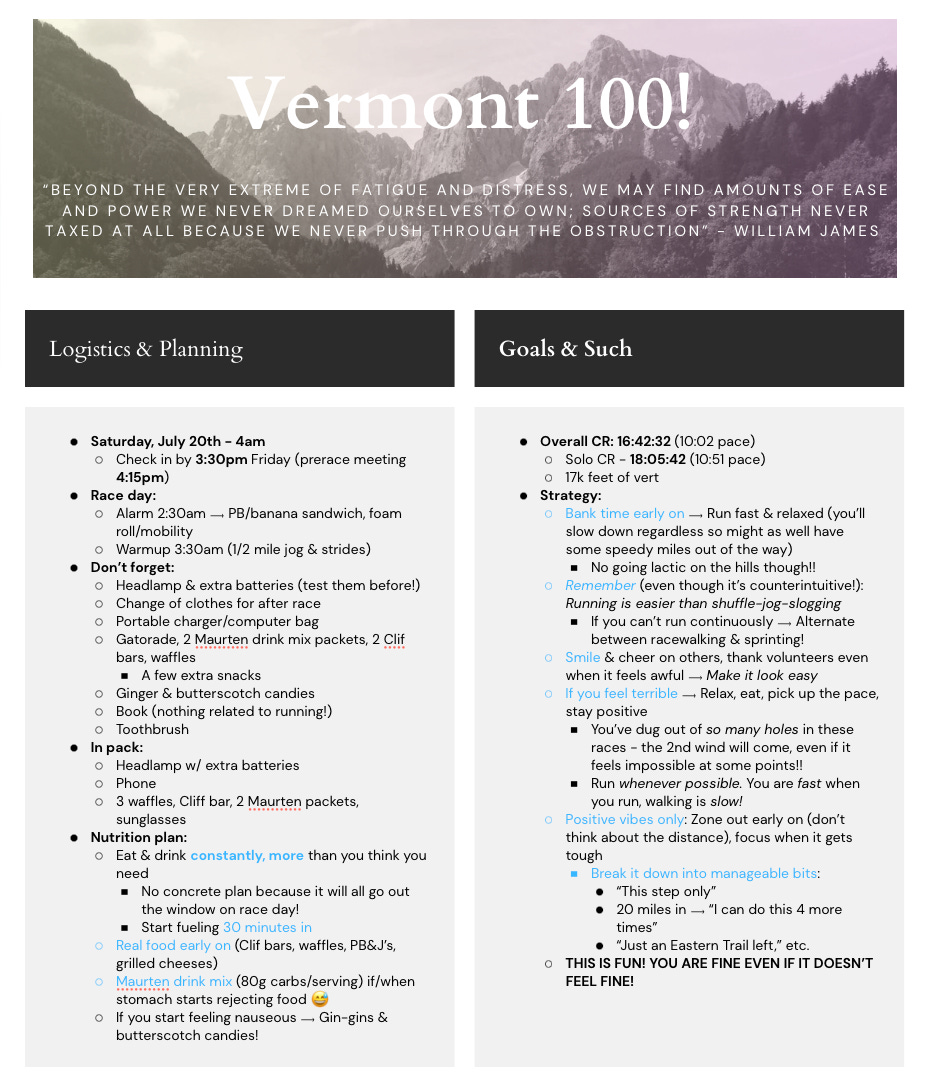
This weekend, I ran my first 100 miler at the Vermont 100. It was the most incredible experience I could’ve asked for. Below are two posts that I wrote for the UnTapped blog, one from before and the other from after the race. I’ve also included the pre-race plan I wrote for myself!
Vermont 100 Blog – Prerace
In my first few years of running, most races followed a similar pattern. Whether I was lining up for a cross country meet, half marathon, or uphill mountain climb, I knew roughly how the day would play out even before the gun went off. I would start strong and confident, running a fast first mile or two before the fatigue or lactic acid kicked in and I descended into a pain cave that got worse with each step. Every mile felt progressively harder, and there was no recovering.
When I began competing in longer events–50ks, 50 milers, and 100ks, mostly–I realized something amazing. I could start a race feeling strong, eventually descend into that pain cave, stay there for a bit, and then, with some good fueling and self-talk, recover and run stronger than I had even initially. This second wind has become my favorite part of ultramarathoning. Until recently, I never pushed far enough to know it even existed. You have to run as hard as you can for as long as you can, suffer greatly, then come back from the worst pain and fatigue to realize you have a whole other gear. This is why I want to run 100 miles.
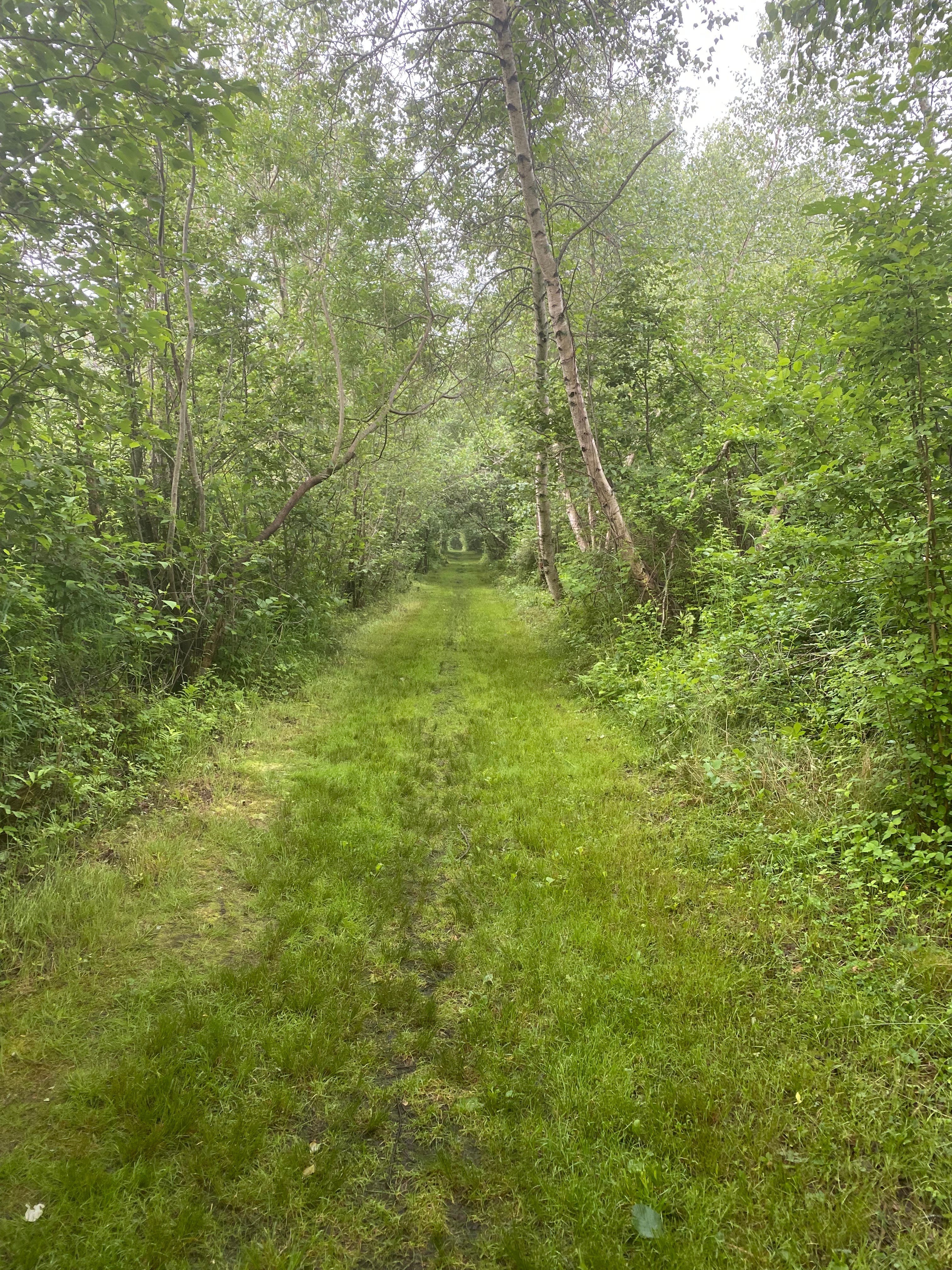
The Vermont 100 was an easy choice for my first go at the distance. Everything about the race intrigued me, from its rich history (originally a horse race, runners first completed the event in 1989, making it one of the country’s oldest 100-milers), to the nature of the course (hills. Dirt roads. More hills), to the close-knit community surrounding the event. Running the Vermont 50 last fall, a race that follows much of the same course, solidified my decision.
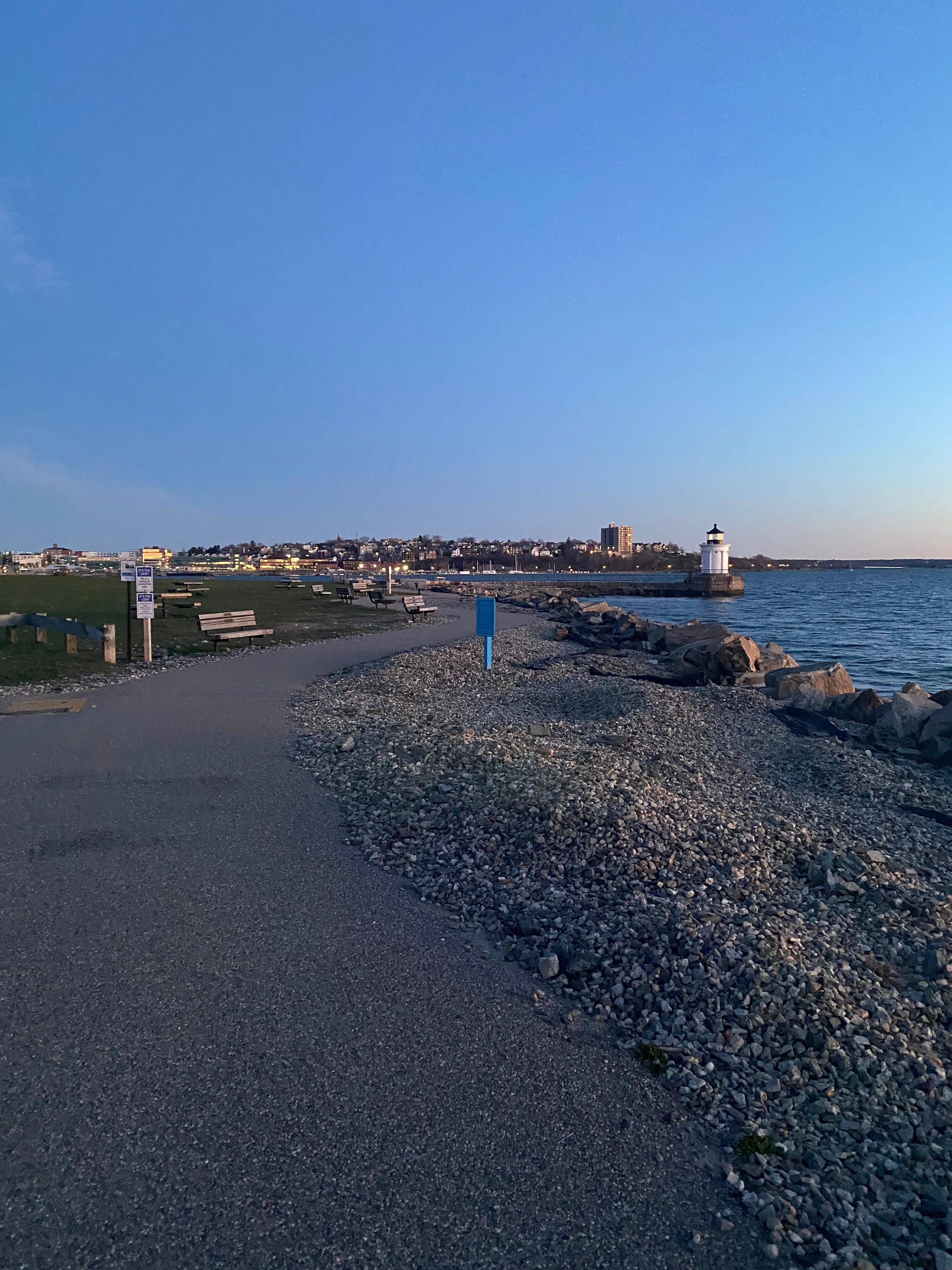
100 miles is a long way to run. It is not nearly as simple as 50 miles twice or 25 four times. The distance has both excited and terrified me throughout my three years as an ultrarunner, and I’ve procrastinated tackling it, choosing instead to compete in a steady stream of 50ks, 50 milers, 100ks, and other similarly long-but-not-too-long events. This year, I’ve been racing more than ever, racking up hundreds of miles on the roads and trails, and have been continually amazed at how quickly my legs recover between efforts. Physically, I know I am ready for 100 miles. Mentally, it will be a challenge. It will take a lot of trust in myself and my training to ride out those inevitable low moments, knowing they are a necessary precursor to that second wind. Because what I’ve noticed is that the second wind, unlike the first, doesn’t end. In my most recent races, I felt strongest after 10 hours of running at a decent clip. What’s the ceiling? When does the second wind end–or does it? Running 100 miles may be merely an excuse to test my physical and mental limits, and I can’t wait to learn what they are.
Prerace Plan
Vermont 100 Blog – Post-Race
90 miles and 16 hours into the Vermont 100, I switched on my headlamp as the dirt road I’d been running up turned into a steep, rock-littered trail. Though I felt a pang of disappointment–it had been my goal to finish before dark–the overwhelming emotions were calmness, awe, and a delirious sense of joy. I’d been running since 4am, from the predawn darkness through midday heat and evening shadows, and suddenly realized I felt stronger than ever. The trail was lined with glow sticks, and occasional fireflies provided additional bursts of light. I passed houses where I could hear the clang of silverware through screen doors and cheers from front porches. I decided then to run every step of those last 10 miles as hard as I could. It was absolutely magical.
Just hours earlier, things had been much different. After a fast and nearly flawless first 50 miles, my race began to go south. I tripped on an uneven patch of grass and had the wind knocked out of me. Feelings of nausea became overwhelming, and I spent the infamous climb out of the Margaritaville aid station dry heaving on the side of the road. 100k runners who I’d passed earlier began flying by and asked what was going on. Dropping out was never an option, but I felt an overwhelming sense of dread as I slowly realized I was going to have to walk the final 40 miles.
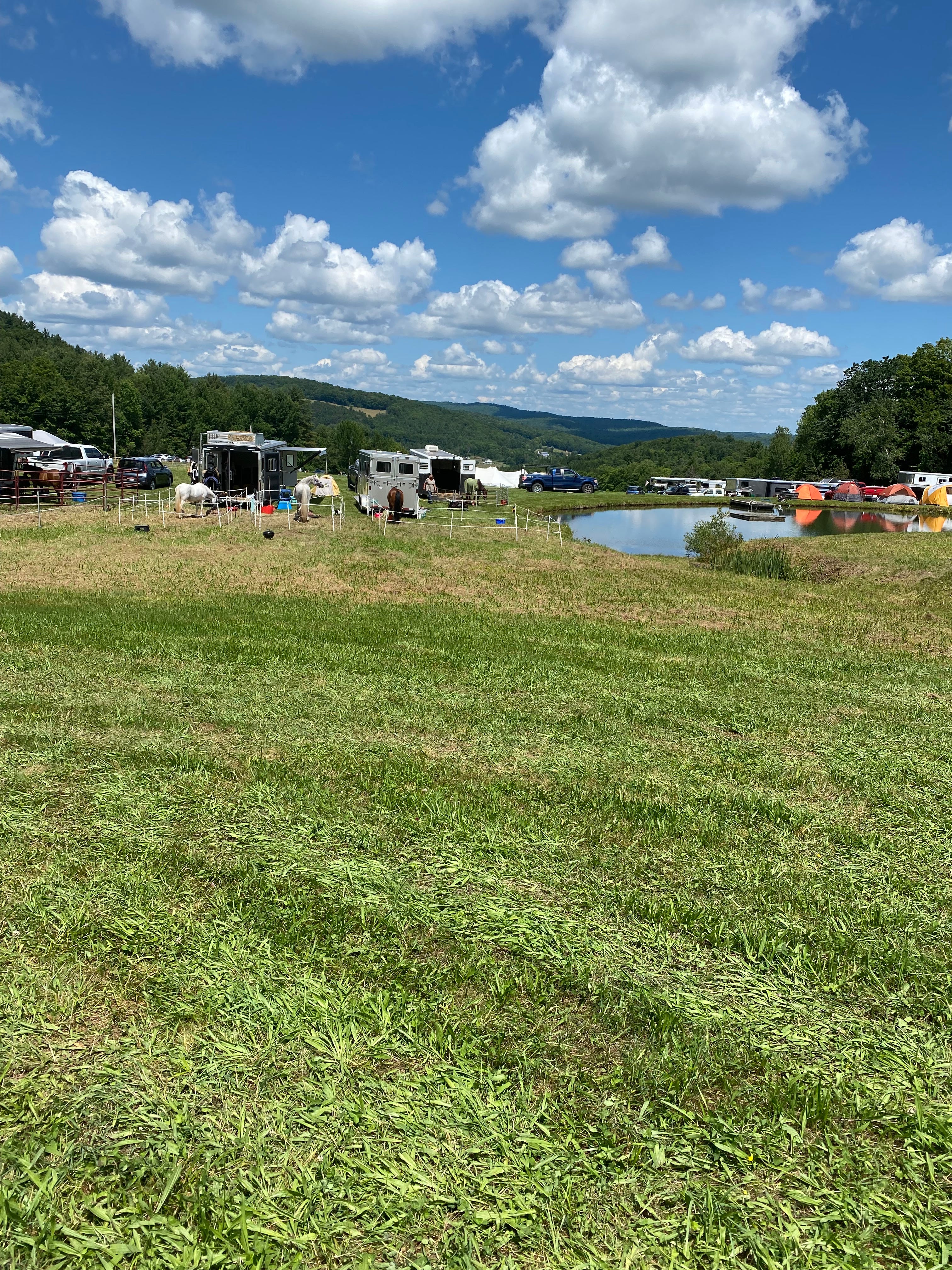
Though Vermont was my first 100 miler, I’d finished over two dozen ultramarathons and felt well-prepared for the inevitable highs and lows that accompany running such long distances. Going into the race, I knew that there would be peaks and valleys (both literally and figuratively–the 17,000 feet of climbs that make up this course are relentless!). But I didn’t expect them to be so dramatic. The good moments were great–seeing friends at aid stations, flying up and down hills, watching the sun rise over the Green Mountains. But the low moments were awful.
What propelled me out of that worst patch turned out to be an unassuming biker who passed me around mile 68. “They’re waiting for you at Camp Ten Bear!” he told me. Camp Ten Bear, an aid station that marked the finish of a 23-mile loop considered the heart of the race, stood out in my mind as the beginning of the end. And now I was close! I sped up to a shuffle, then a jog, then a run that didn’t stop until I reached the finish line hours later.
In addition to the support of the biker (and dozens of wonderful volunteers along the way), fueling and hydration was critical to getting through the day. As a solo runner, I had no crew or pacers along the way, which meant that I stuffed my pack with lots of Maple Waffles, filled my bottles with Lemon Mapleaid, and focused on staying ahead of my nutrition needs. Looking back, I think some of my low points stemmed from underestimating just how many calories I needed. But rather than get discouraged about what could’ve been, I find it exciting to think about how much room for improvement there is for my next go at the distance!
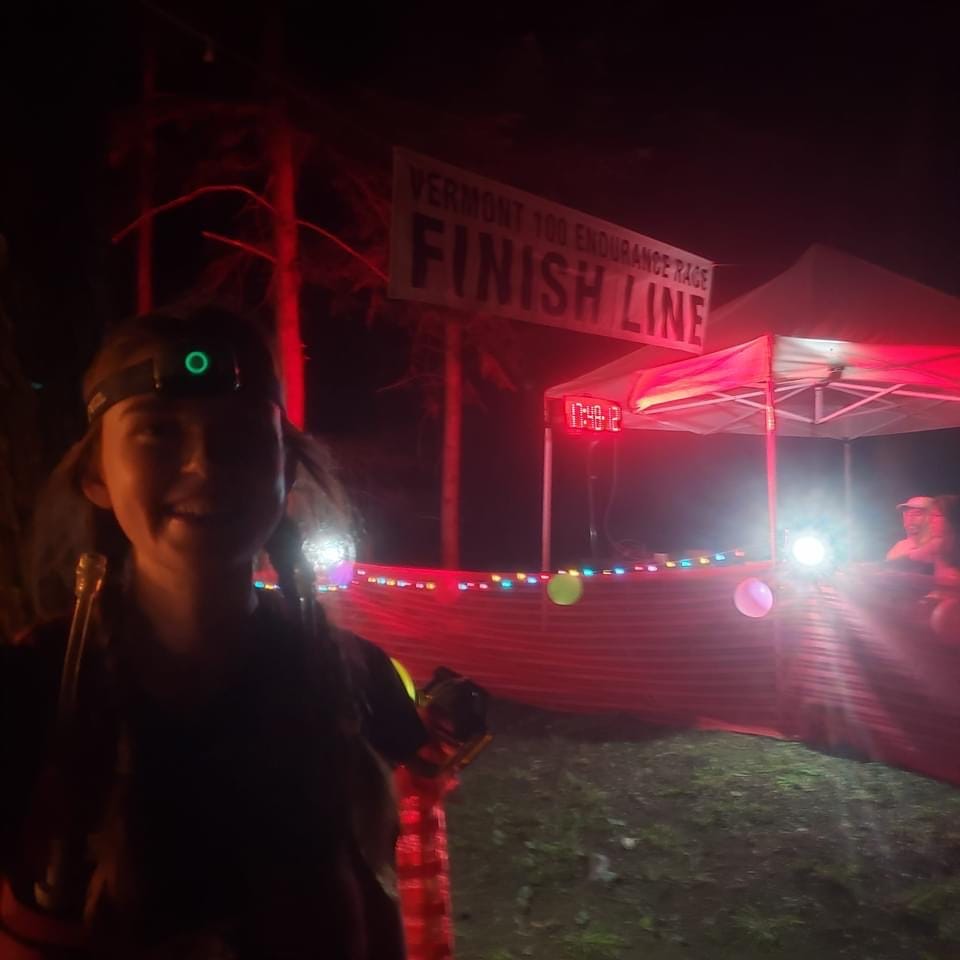
As my headlamp illuminated a sign that marked half a mile left, I began to get choked up. But just as I started to hear cheering from the finish line, I suddenly spotted two lights ahead of me. It was the woman in 2nd place, who had passed me some 30 miles earlier, and her pacer. I’ve never had a strong kick, but I sprinted with everything I had. When I made the pass, she matched my speed and we battled to the line in a photo finish that was later called a tie for 2nd place at the awards ceremony. My time, 17:46:49, was well under my sub-18 hour goal and turned out to be a solo course record. I couldn’t have asked for a more incredible experience, and I can’t wait for my next go at the distance. Congratulations to everyone who ran this year’s Vermont 100!
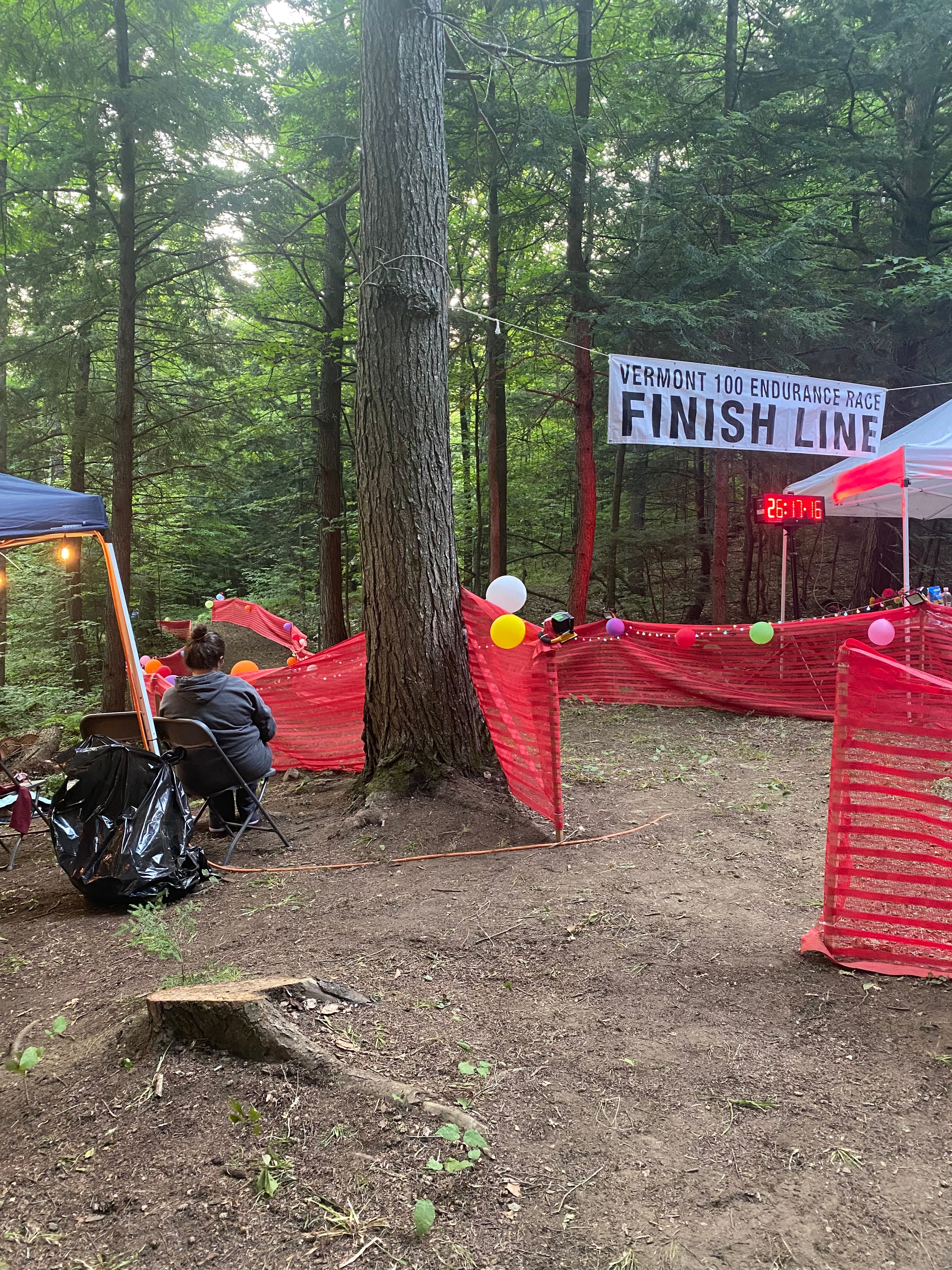
Writing this now, 60 hours later, the fatigue and soreness has mostly gone away (which is a little shocking to me!) and I absolutely cannot wait to get back out there. I’m so grateful for everyone who made it such an incredible weekend—even though I didn’t have an official crew, I felt so supported before, during, and after the race. This is truly the best sport ever.
