
Running 100 miles is really hard on your body.
At mile 99 of the Vermont 100, I felt invincible. I was cruising down the trail like I’d just begun the day, sprinting towards the finish line at the pace I used to close 5k’s in. But when I stopped, every second of those 17 hours and 46 minutes came crashing down on me all at once. I felt like I’d been hit by a bus. My legs shook, my vision blurred, my stomach churned with nausea. I’d run dozens of “shorter” ultras—50ks, 50 milers, 100ks, etc—but the toll that 100 miles took was unlike anything I’d experienced before.
(I wrote more about my experience at the Vermont 100 here)
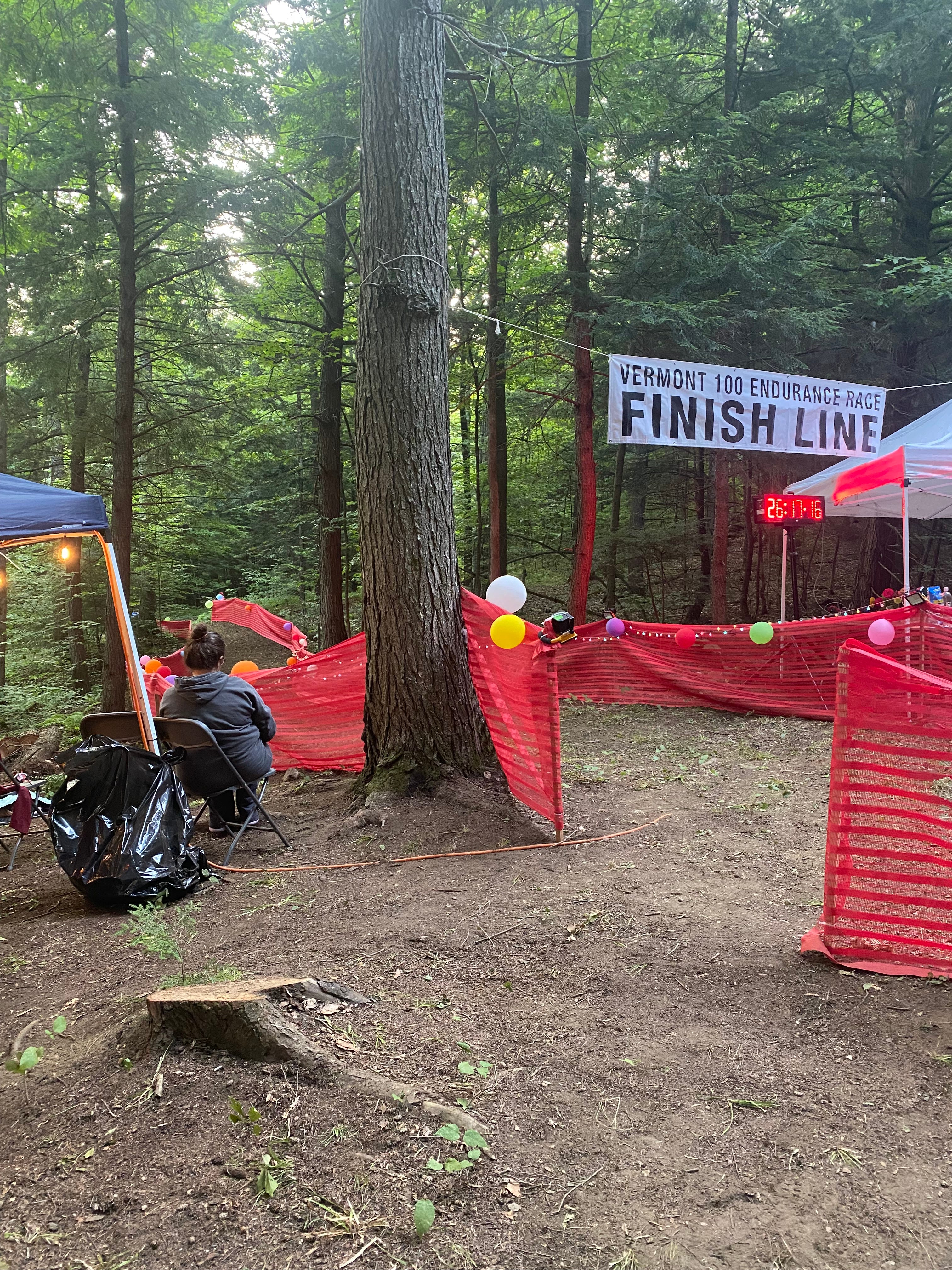
I’ve never been good at resting. After Vermont and Notchview (the 12-hour race I’d run the previous week), I was so high on adrenaline and excitement that I convinced myself my body was back to normal within a few hours, really. I took 2 days completely off (although one of those days involved 2 hours of sleep and a full morning of race cheering) then jumped right back into an 80+ mile week. Within 8 days of the race, I did a 39-mile long run. I noticed little things that were slightly off—my legs felt flat, my heart rate was through the roof even on easy runs and at rest, and my heels screamed at me when I got out of bed in the morning—but overall, I felt surprisingly good.
This Saturday, 3 weeks after Vermont, I lined up for another race, an 8-hour timed event. I had a decent showing, winning and setting the course record, but nothing about the race felt good. I was miles behind the distance I thought I could reach—although to be fair, it was a brutally hot and muggy day, with the course fully exposed in the sun—and simply couldn’t find that energy I usually have in the later miles of a race. Wow, I thought as I lay in the grass after crossing the finish line, 100 mile recovery might take longer than anticipated.
That race also got me questioning my 24-hour goal this fall. The course, multiple small loops, was so. darn. boring. How could I manage to stay focused for another 16 hours on similar terrain? More than anything, I love runs that feel like adventures—point-to-point traverses or single-loop courses are my jam. Before 2024, I’d never even done a timed event. Now, not even 8 months into the year, I’ve done 3 12-hours, an 8-hour, and a 6-hour. But these have probably been the races I’ve enjoyed the least. Something about those repetitive laps, about knowing that no matter how fast you run you won’t finish any sooner, is really hard for me. Maybe I just need to get tougher. I still plan on running the NJ 24-hour this fall, but I don’t imagine doing any races similar to it until then.
What kind of runner am I? Every athlete has to find their niche, especially in this sport. I don’t like track, road races, or cross country (been there, done that). I also don’t like overly technical trails with rock scrambles and hair-raising descents. Now, clearly, I don’t enjoy the small looped courses either. The race has to be long enough to feel like an experience, but not so long that I’m reduced to a bent-over shuffle by the end (in the realm of 50k – 100 miles, usually). My ideal course is a big loop with dirt roads, some moderately technical trails, and lots of vert. Oh wait, I just described Vermont 100 exactly. I think it’s ok—healthy, even—to acknowledge you have strengths and weaknesses as an athlete. I might call myself a trail runner or an ultramarathoner, but there are some types of races fitting into these categories that I’ll avoid like the plague. I could probably write a whole separate post on this. It’s been something that’s on my mind quite a lot.
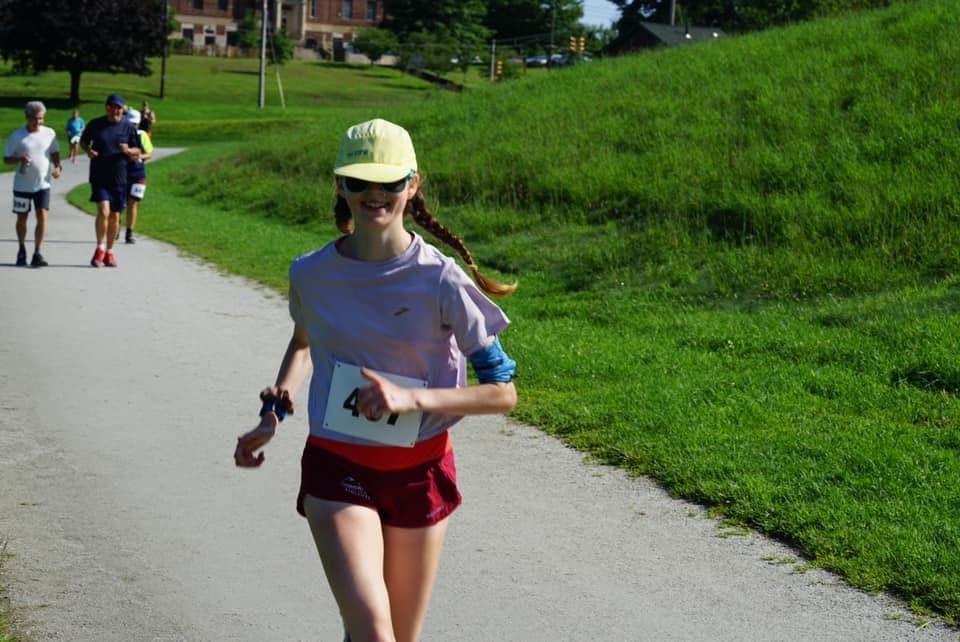
Learning that running in small circles for 8 hours is pretty darn boring.
As I write this, it’s the middle of August, and I go back to school in a little over 2 weeks. This summer has been amazing. If you’d told my 1-year-ago self some of the things that would happen (both related and unrelated to running), I’d be absolutely elated (and I am!) How fortunate I am to get to spend my days chasing my goals, working in jobs I love, and spending time with my favorite people. It will be an adjustment to go back to school—although I always enjoy the change of not having to be on my feet all day—but I can’t wait for the fall and all that comes with it (mostly cooler temps…this heat and humidity can leave for good!)
Here’s what I’m loving & learning.
Things I’m Loving
- Golden hour. I finished the Vermont 100 just before 10pm, and spent the next few hours on a cot in the food tent, alternating between shaking with nausea and exhaustion and forcing down burgers and candy. From there, I stumbled to my car around 1am, slept peacefully in the back for 2 hours, and woke up to the sound of cheering just before 3:30am. I was restless and delirious with excitement, so I got up, hobbled the quarter mile to the finish area, and spent the next 6 hours parked in a chair watching some incredible and emotional finishes. The Golden Hour, the final hour before the cutoff, was especially amazing. If you ever need to restore your faith in humanity, spend time at the finish line of a 100-miler.
- Learning to think good when I don’t feel good. Recently, I had an epiphany while out on a run (which is honestly pretty rare…I rarely do any quality thinking while training!): I struggle to think positively when my legs and body aren’t feeling great. It sounds simple, but I’d never really put the two and two together before. When everything’s clicking and the miles fly by, I’m happy as a clam. But clearly, the body and mind work together. On those days when my legs don’t respond, my stride feels weak and clunky, or I can’t seem to find a good rhythm, my mind immediately goes to a negative place. I certainly haven’t mastered the art of thinking positively when I feel anything but, yet I think recognizing the trend is an important first step.
- The Olympics! This needs no explanation. Watching the men’s 1500m final live at work was so incredibly exciting. I’ve also gotten invested in a handful of random sports… everything from water polo and skateboarding to synchronized swimming and high diving.
Things I’m Learning
- Good races don’t always feel good. In my early years as a runner, I noticed something interesting: My best races always felt the easiest. My first state championship. The time I PR’d in the 10k by over 2 minutes. The mile race where I podiumed after being seeded almost dead last. On the other hand, my worst races always felt the worst. But when I started running ultras, I realized that this rule didn’t always apply. It’s really difficult to feel good while moving fast for hours and hours on end. In these longer distances, there are many, many highs and lows, and some of my best races have felt absolutely awful. It helps to remind myself of this when those inevitable lows hit during a race. It doesn’t have to feel good to be a good race.
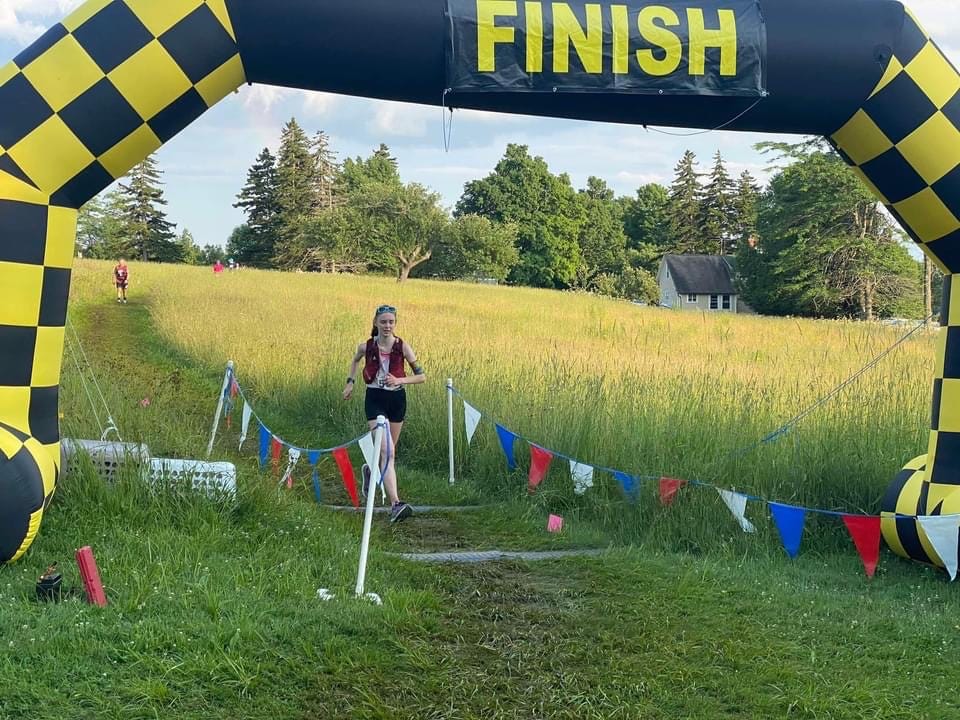
The Notchview 12-Hour certainly didn’t feel good. But it was still a good day.
- The second wind is real. This is one of my favorite quotes, taken from Dean Karnazes’s book “A Runner’s High:”
- “I didn’t fatigue, didn’t exhaust, didn’t falter; if anything, I grew stronger. The human body is far from understood. If we can just suspend our skepticism and believe in miracles, sometimes they come true. Not long ago I was facedown in the dirt, unable to move; now I was running at a hardy clip, entirely resuscitated.”
- Ultrarunning is an incredible sport because of these second winds. At mile 60 of the Vermont 100, or hour 8 of the Notchview 12-hour the week prior, I never thought I could become “entirely resuscitated.” In both of those events, I was struggling greatly—barely moving forward, unable to eat or drink, and feeling dizzy and weak. But I did. In a matter of miles, I was able to pick up the pace significantly, keep calories down, and put a smile back on my face. Remembering how truly miraculous second winds are has been a major motivator for me during low moments.
- Recovery takes time. It really does! As much as I want to feel 100% back to normal right away after two big weeks of racing, it just doesn’t work like that. I’m learning patience, as well as the power of using this time to reflect on and be grateful for the way my body has responded to the demands I’ve put on it. Don’t ignore recovery, or it will come back and make you give it the respect it deserves.
Here’s to continuing to learn patience and the many other lessons this sport teaches us!
